





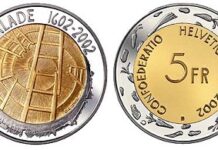
War is the father of all things. A short history of the art of besiegement: Part 2
A lot of stories can be told based on numismatic objects. The history of besiegement is one of them and thus, in memory of collector Georg Baums, we will concern ourselves with it and observe how fortresses on medals change over time.
40 Years Gorny & Mosch Giessener Münzhandlung
Many coin collectors never forget, who was the one, who sold the very first coin to them. Perhaps you as well will remember your own collecting past, while reading the history of 40 years of Gorny & Mosch...
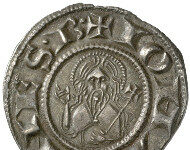
Human faces, part 26: Viva il popolo
Why was the human head the motif on coins for centuries, no, for millennia? And why did that change in the last 200 years? John the Baptist paid for his convictions with his head. The Florentines honour his courage on their coinage.
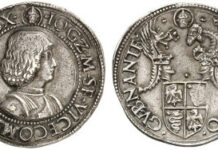
Human faces, part 32: Murder in Milan
After the brutal murder of the Duke of Milan, only one question is on the mind of Milan’s aristocracy: who will follow in his office? The seven-year-old son? Quite surprisingly, the succession is settled peacefully. Peaceful, but not uneventful, thanks to the dowager duchess…
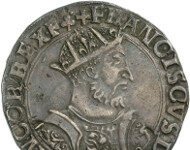
Human faces, part 37: Francis I, “Traitor of Christendom”
Why was the human head the motif on coins for centuries, no, for millennia? And why did that change in the last 200 years? In this episode, King Francis I makes a politically necessary decision, which earns him the title “Traitor of Christendom”.
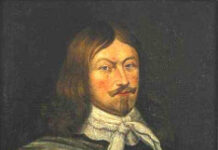
The Thirty Years’ War – Part 17
Religion was of secondary importance in the Thirty Years’ War. It was all about power and money. Ursula Kampmann brings that era alive. The war grinding on for a few years before it was finally over was only due to the fact that all parties involved intended to improve their negotiating position.
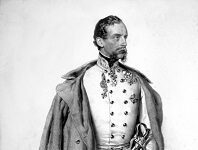
Montenuovo Collection – Who stands behind the name?
In their Auction 29, on 18 May 2016, SINCONA AG Zurich will offer numerous items from the legendary Montenuovo Collection. Ruedi Kunzmann tells the story behind this collection.

The coins of Maria Theresa
On 13 May 1717, roughly 300 years ago, Maria Theresa of Austria was born. Could there be a better reason to introduce the coins of Frederick II’s arch enemy on the basis of a few lots from the upcoming Künker sale from 27 June to 29 June 2017?
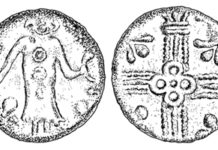
2000-year-old Victoria Cross found
In October 2012 metal detectorist John Goody found a ‘new’ ancient British coin, hitherto unrecorded and unpublished. It is rather worn, but nonetheless intriguing because I’m unable as yet to pin it down to a particular ruler or even, with confidence, to a particular tribe.

Human faces, part 27: Stupor Mundi
Why was the human head the motif on coins for centuries, no, for millennia? And why did that change in the last 200 years? A particularly clever mind was hidden in Frederick’s II head, whose inexhaustible thirst for knowledge earned him the nickname “Stupor Mundi”, wonder of the world.